


Request for Proposals: 2026-2027 Refugee School Impact School-Age Community-Based Organization Grant
Click here to apply
Timeline
- June 17, 2026, 10:00 AM-11:00 AM: Optional Virtual Information Session. Click here to access the video recording and presentation slides.
- July 10, 2026 by 5:00 PM PST: Proposals are due.
- August 31, 2026: Anticipated date of award notification from School’s Out Washington
- October 1, 2026–September 30, 2027: Anticipated funding period for projects.
Program Priorities and Services
The central goal of the Refugee School Impact Program (RSIP) is to fund activities that lead to the effective integration and education of eligible children and youth. Allowable activities must be aligned with the intent and purpose of the Refugee School Impact funding.
The following are the priority areas and allowable activities:
Developing capacity for school staff and systems, through activities and resources such as specialized trainings for school staff around the unique and varied needs of ORR-eligible populations, ensuring language access by translating critical documents, interpretation, and specialized staff dedicated to working with ORR-eligible school-aged children, youth, and families.
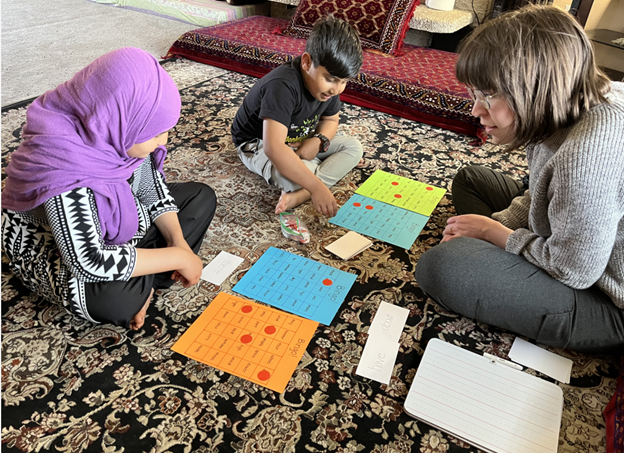
- Providing specialized approaches and support for eligible students, such as English as a Second Language classes, tutoring, newcomer or transitional programs, after school and summer programs, mentoring, behavioral health supports, and programming that supports integration.
- Supporting families learning to navigate the U.S. education system, such as school-specific orientation for both families and students, navigators or cultural brokers, and language access.
- Developing capacity for school staff and systems, through activities and resources such as specialized trainings for school staff around the unique and varied needs of ORR-eligible populations, ensuring language access by translating critical documents, interpretation, and specialized staff dedicated to working with ORR-eligible school-aged children, youth, and families.
Eligible Beneficiaries
Participants eligible for this program include Washington State residents who:
- Have legally resided in the U.S. less than 60 months and are not yet a U.S. citizen; and
- Are currently a school-age child (Kindergarten – 12th grade), enrolled in an equivalent GED program, or will start kindergarten in the fall (hence is served the summer directly preceding the fall of kindergarten enrollment) or the parent of a school-age child; and
- Provide acceptable documentation of any of the following immigration statuses:
- Refugee
- Asylee (meaning asylum was approved and is not pending immigration proceedings)
- Cuban/Haitian Entrant
- Amerasian
- Certified Victims of Trafficking
- Iraqi and Afghan Special Immigrant Visa Holder (and their eligible family members)
- Afghan Humanitarian Parolee*
- Ukrainian Humanitarian Parolee**
- Other populations made eligible by ORR
*Afghan Humanitarian Parolee must have a valid/current parole to enroll in new programming and were paroled into the US during these dates:
- Afghans who were paroled into the U.S. between July 31, 2021 and Sept. 30, 2023.
- Afghans who were paroled into the U.S. after Sept. 30, 2023 ONLY IF they are:
- A spouse or child of an Afghan Humanitarian Parolee who was paroled into the U.S. between July 31, 2021, and Sept. 30, 2023, OR
- A parent or legal guardian of an Afghan Humanitarian Parolee who is an unaccompanied child and was paroled into the U.S. between July 31, 2021 and Sept. 30, 2023.
**Ukrainian Humanitarian Parolee must have a valid/current parole to enroll in new programming*(See Ukrainian Re-Parole Note below) and were paroled into the U.S. during these dates:
- Ukrainians or non-Ukrainians who last habitually resided in Ukraine and who were paroled into the U.S. between Feb. 24, 2022 and Sept. 30, 2024.
- Ukrainians who were paroled into the U.S. after Sept. 30, 2024, ONLY IF they are:
- A spouse or child of an Ukrainian Humanitarian Parolee who was paroled into the U.S. between Feb. 24, 2022 and Sept. 30, 2024, OR
- A parent or legal guardian or primary caregiver of an Ukrainian Humanitarian Parolee who is an unaccompanied child and was paroled into the U.S. between Feb. 24, 2022 and Sept. 30, 2024.
*Note Regarding Ukrainian Re-Parole
A UHP must have a current/valid Humanitarian Parole to enroll in new programming. If the grantee intends to continue services after the parole expires the grantee is required to:
- Ensure the client has filed their re-parole application at least 1 day prior to the expiration. Documentation of this must be kept on file. If the client has not applied for re-parole, they can no longer participate in programming.
- The grantee must reverify that the client is approved for re-parole. Documentation must be kept on file. If re-parole was denied and the client does not have another eligible status (such as asylum), the client must be exited from programming.
Sub-grant Applications
Applicants must be a nonprofit community-based organization working in Washington State and will be required to submit their Employer Identification Number (EIN) and current business license to verify their status. Schools, school districts, and educational districts may not apply. Religious organizations may apply. Funds to religious organizations may not support religious programming or materials.
Funding Availability
This funding opportunity is made available through a grant from the federal Office of Refugee Resettlement (ORR) to Washington State’s Department of Social and Health Services’ Office of Refugee and Immigrant Assistance (DSHS/ORIA). Washington State’s Department of Social and Health Services’ Office of Refugee and Immigrant Assistance (DSHS/ORIA) anticipates the availability of approximately $1.9 million for 15-20 sub-grants with Refugee School Impact funds. Grant funding from School’s Out Washington (SOWA) is contingent upon SOWA receiving a 2026-2027 contract from ORIA for Program Administration of the Refugee School Impact Program.
Federal Requirements
Funded grantees will be required to implement at least one activity for children and youth. Services to help parents navigate school systems and to equip school personnel to serve refugees are also allowable. Funded grantees will need to measure and report results on one child/youth outcome, provide narrative and financial reports, submit background check results for staff/volunteers working directly with students, provide individualized student (and parent, if applicable) demographic data and copies of Department of Homeland Security immigration documentation verifying that participants are eligible, maintain Commercial General Liability Insurance or Business Liability Insurance (including coverage for bodily injury, property damage, and contractual liability), and comply with federal regulations (see below).
Student Activities
- To more closely align activities to the ORR priorities, core activity types for student activities in the application only include: (1) Literacy and STEM; (2) School Navigation/Integration; (3) Graduation and Beyond; (4) Mentoring; and (5) Behavioral Health/Mental Health Supports.
- Stand-alone field trips and recreational activities are NOT allowable. You can use grant funds for field trips/recreational activities in conjunction with a core activity type.
- Orientation has been removed from our activity type descriptors because we have fewer new arrivals, but you can provide this service under School Navigation/Integration.
- We added Behavioral Health/Mental Health Supports, which includes counseling, group therapy, support groups, specialized programming to address trauma, to improve well-being and to build resiliency, etc.
Federal Regulations
Since this is federal funding, funded organizations must comply with federal regulations. This award is subject to the Administration for Children & Families (ACF) General Terms and Conditions – Mandatory, Formula, Block and Entitlement Grant Programs. These requirements may be found at Mandatory GENERAL TERMS and CONDITIONS – 2021 Update.pdf (hhs.gov)
- Grantees must agree to comply with the Administrative Requirements of the General Terms and Conditions.
- In order to receive funding, the grantee must not presently be debarred, suspended, proposed for debarment, declared ineligible, or voluntarily excluded by any Federal department or agency from participating in transactions (debarred).
- Funded grantees must:
- Maintain records that identify, in its accounts all federal awards received and expended and the federal programs under which they were received;
- Maintain internal controls that provide reasonable assurance that federal awards are managed in compliance with laws, regulations, and provisions of contracts or grant agreements that could have a material effect on each of its federal programs;
- Prepare appropriate financial statements, including a schedule of expenditures of federal awards;
- Procure and pay for a single audit or a program-specific audit for that fiscal year if $1,000,000 or more in federal awards from any and/or all sources are expended in any fiscal year.
Funding Restrictions
- Grant funds cannot be used to serve ineligible students and parents. Ineligible students and parents cannot benefit from programming solely funded through this grant. Any programming that supports both eligible and ineligible students and parents must have proportional non-RSIP funding.
- Grant funds cannot be used for stand-alone field trips or recreational activities. Field trips and recreational activities can only be offered in conjunction with a core program such as an English as a Second Language class, tutoring, newcomer or transitional program, after school and summer program, mentoring, behavioral health support, or programming that supports integration. A student must be enrolled in a core program in order to participate in a field trip or a recreational activity.
- Funding cannot be used for:
- teaching a language other than English;
- participant stipends (money paid to individuals for participating in programs);
- college application fees;
- driver’s license or permit fees;
- parents’ English classes or job search activities;
- case management and resource/referral services related to families’ basic needs;
- construction/renovation; and
- lobbying.
- These RSIP-School Age CBO services must either be different from the RSIP-District and ERSI services or serve individuals not participating in RSIP-District or ERSI services.
- Administrative costs are limited to 15% or your organization’s federally approved indirect rate.
Resources
Questions
Please contact Pang Chang at pchang@schoolsoutwashington.org